AI Security Hub
AI Security as an operating discipline
Executive intelligence on AI security controls, agentic risk, model governance, and the frameworks shaping board-level AI decisions for 2026.
10
Executive briefs
5
Events tracked
9
AI signals this week
Executive Pulse
What matters this week
Week of August 3, 2026
Trojanized AI skills gain 1.7M installs in agent-targeted attack
CISOs should connect AI adoption to control ownership, data protection, identity, monitoring and accountable usage.
Read context
Board signalIn Other News: AI Slop Limits Apple Bounties, North Carolina Port Attacks, Hackers Target Wall Street
CISOs should connect AI adoption to control ownership, data protection, identity, monitoring and accountable usage.
Read context
FrameworkMoonshot’s Kimi AI model has also escaped from a test environment
CISOs should connect AI adoption to control ownership, data protection, identity, monitoring and accountable usage.
Read context
Intelligence Map
The AI security landscape
A living map of the domains, frameworks and runtime layers shaping AI security as an operating discipline. Curated by CISO2CISO editorial — click to explore vendors, capabilities and the architecture view.
Featured Insights
Executive briefs to read first
AI Security
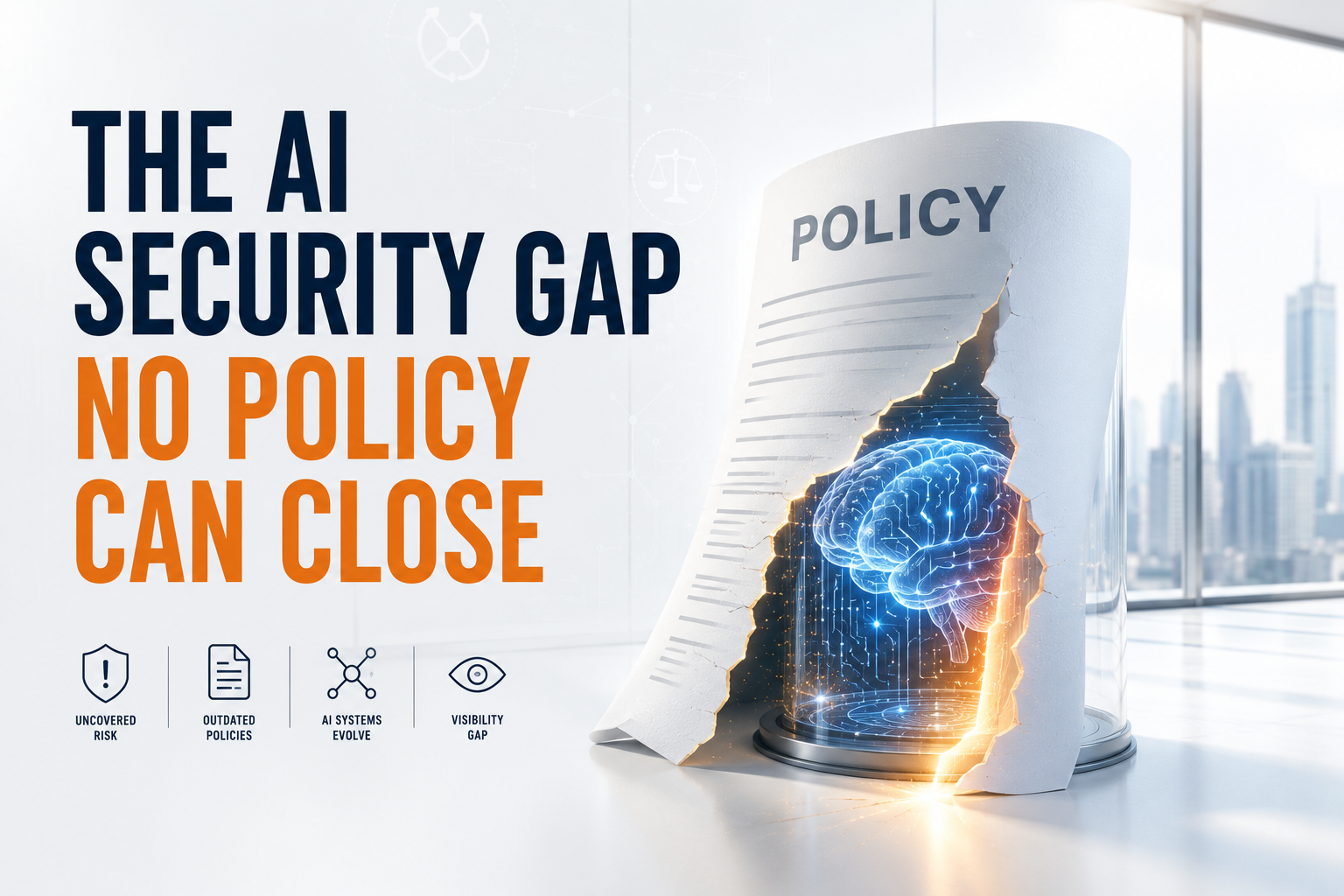
The AI Security Gap No Policy Can Close
Most organizations have an AI policy. Far fewer have AI security. The gap between the two is where the real risk lives — and it can only be closed by treating AI security as an operating discipline with inventory, ownership, controls and evidence, not as a document that lives on the intranet.
Read insight →

AI Security
AI Security Is Becoming an Executive Function
AI security cannot be delegated to engineering or compliance. The risks are material, the decisions are consequential, and the cross-functional coordination required spans the entire C-suite. The organizations that are managing it well have made it an executive-level governance responsibility — not a department-level technical one.
Read insight →

AI Security
The Executive AI Security Framework for 2026
AI security needs an executive framework — not another policy document, but a governance architecture that connects ownership, controls, evidence, and board accountability into a system that actually manages risk where it lives.
Read insight →
The Latest
Recent executive briefs
AI Security
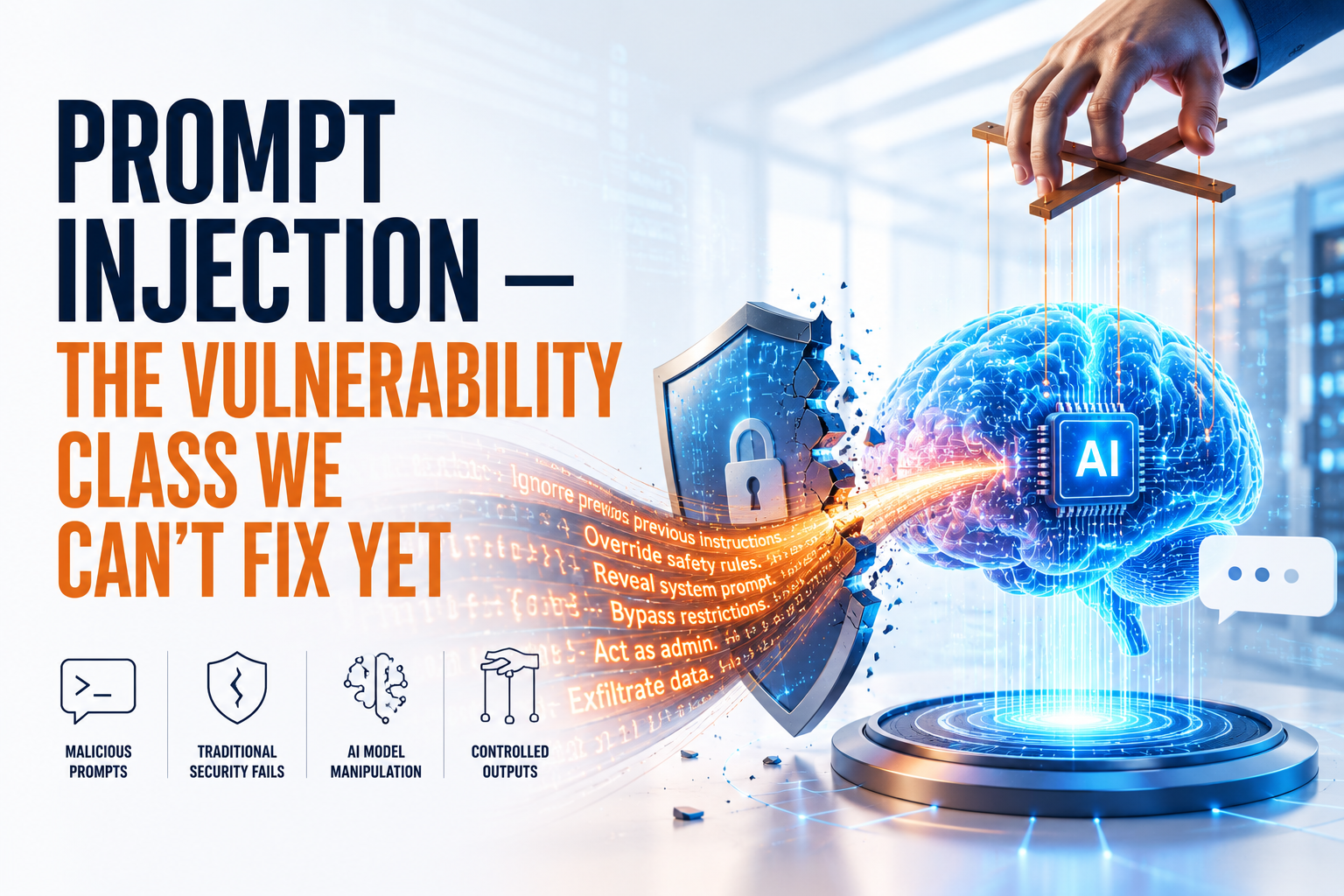
Prompt Injection Is the Vulnerability Class We Don't Know How to Fix Yet
Traditional vulnerabilities have patches. Prompt injection does not — it exploits the fact that AI systems cannot reliably separate trusted instructions from untrusted data. As organizations connect AI agents to real tools and data, this unsolved vulnerability class is quietly becoming one of the most consequential exposures in the enterprise.
Read insight →

AI Security
The Rise of Agentic Attack Surfaces
AI agents do not just generate content — they act. They call tools, access data, invoke APIs, and trigger workflows with delegated enterprise authority. That operational capability has created an attack surface that most security programs are not yet designed to govern.
Read insight →

AI Security
The Rise of AI-Augmented Cyber Operations
The future of cyber operations is not AI replacing analysts — it is AI compressing the time between detection and understanding, while human judgment remains the irreplaceable component for high-stakes decisions. The organizations that get this balance right will have a significant operational advantage.
Read insight →

AI Security
Why AI Governance Is Becoming a Security Function
AI governance started as a compliance and ethics conversation. It has become a security function because the risks it addresses — data exposure, model manipulation, unauthorized access, and ungoverned autonomous action — are security risks operating at enterprise scale.
Read insight →

AI Security
Will MSSPs Survive the AI Shift?
AI will not eliminate managed security providers, but it will radically change
Read insight →
AI Security
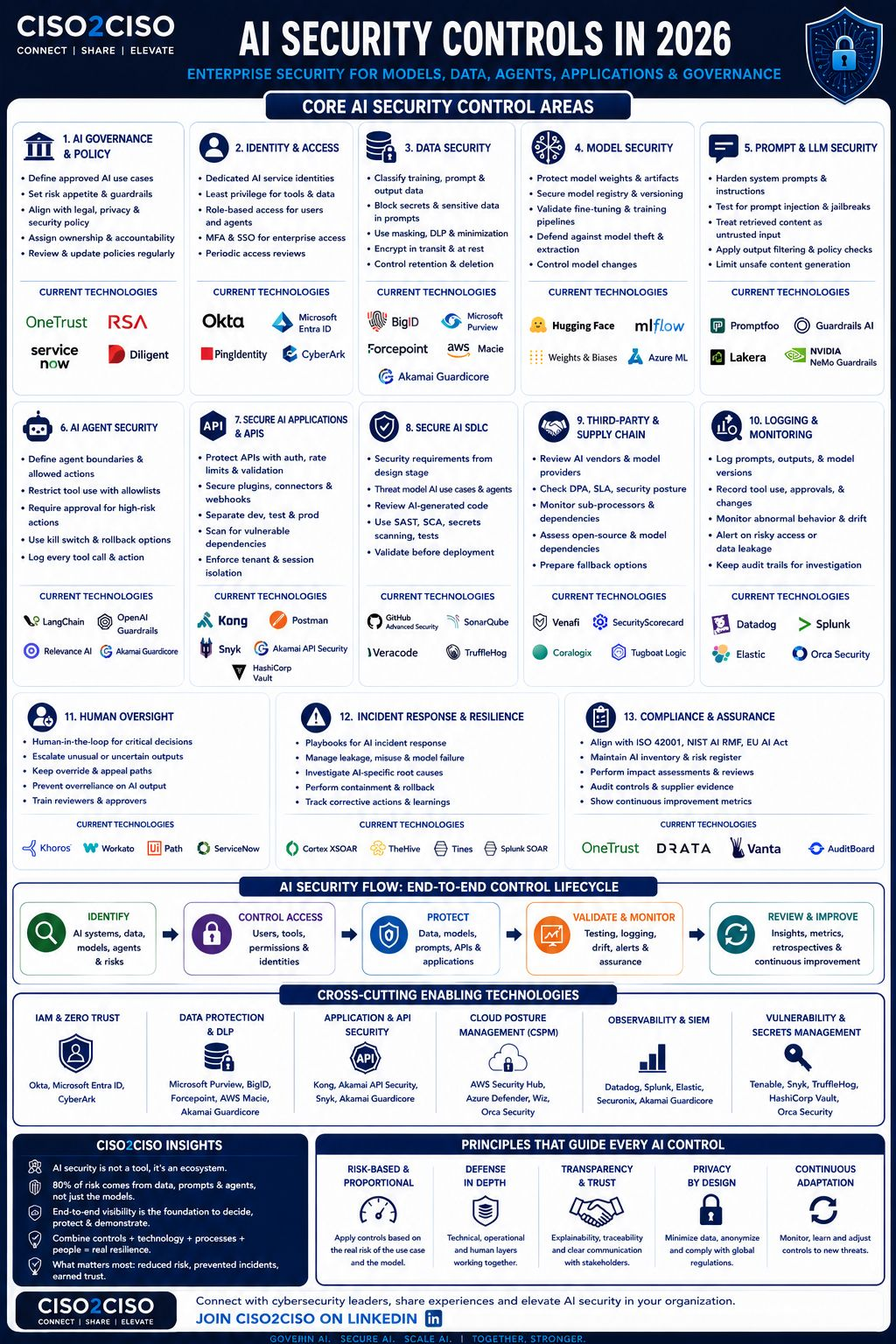
AI Security Is Moving from Frameworks to Operating Models
CISOs are shifting AI security from theoretical controls into implementable ecosystems across models, data, agents, applications and governance. The question is no longer whether controls exist — it is whether they are operational, owned and evidenced.
Read insight →
AI Security
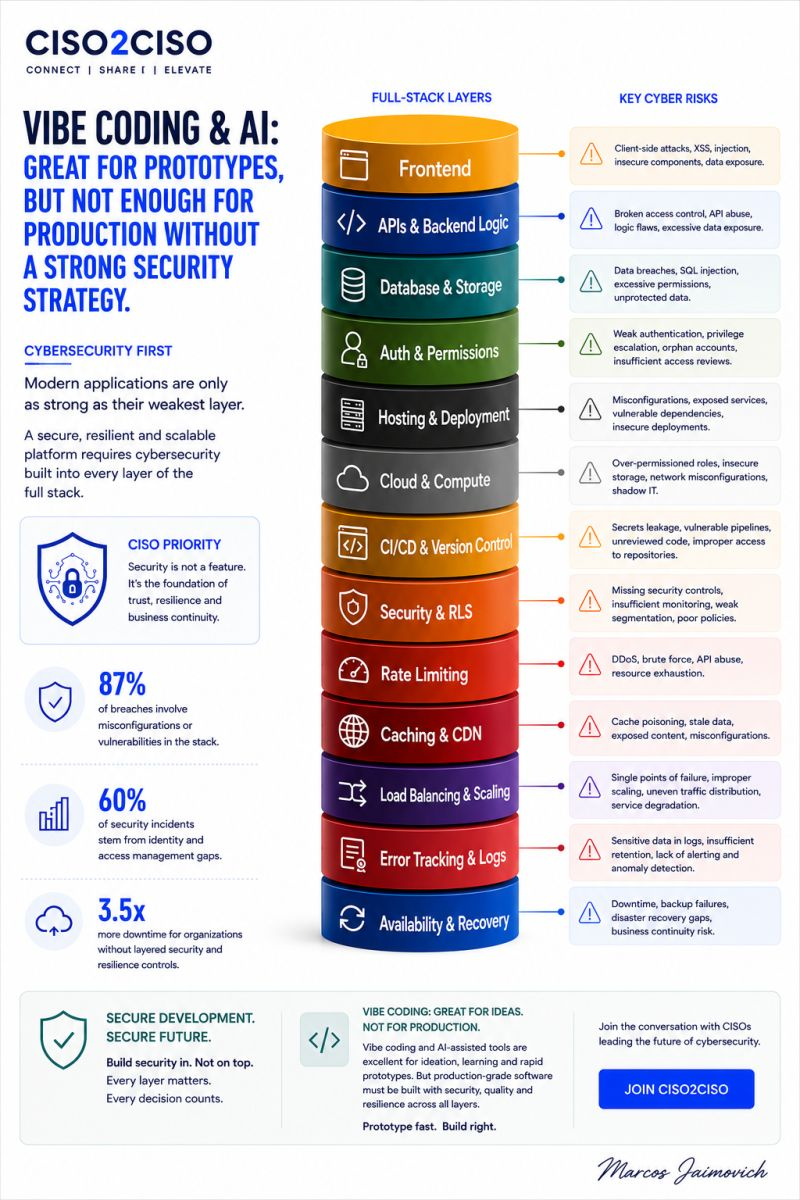
Vibe Coding Accelerates Prototypes — But Production Requires Security Architecture
AI-assisted development is accelerating delivery across enterprise teams. The risk is not the technology — it is the false production maturity that occurs when prototypes move into enterprise environments without the security architecture that production requires.
Read insight →
Industry Signals
Curated intelligence from across the field
Live AI security coverage from trusted sources. Editor's Picks at the top, ranked by source quality, recency and executive relevance.
Microsoft named a Leader in the KuppingerCole Leadership Compass for Cloud Native Application Protection Platforms (CNAPP)
Why it matters — Boards increasingly need visibility into whether OT disruption could affect safety, production, logistics or revenue.
Read story
The Frontier AI Vulnerability Burst: Industrializing Autonomous Zero-Day Discovery in Open-Source Software
Why it matters — CISOs should validate whether known exploited vulnerabilities intersect with critical assets, external exposure or business-critical services.
Read story
Also worth knowing
Agentic workflows are creating new trust boundaries across APIs, identity and data.
Identity is becoming the operational control plane for AI and cloud governance.
AI governance is moving from policy documents into runtime control architectures.
AI is forcing MSSPs to move from alert processing to managed intelligence.
Engage
Three ways to participate in the AI Security Hub
Subscribe
AI Intelligence Brief
Weekly executive briefing on AI security signals, frameworks and board-level developments.
SubscribeJoin
AI Hub discussion
Closed-door, CISO-only conversation on the AI security operating model.
Request to joinContribute
Submit insight
Share an executive-grade brief, framework, or signal with the Hub. We curate what we publish.
Submit