Why AI Governance Is Becoming a Security Function
Executive Summary
AI governance began as a conversation primarily owned by legal, compliance, and ethics functions — focused on questions of fairness, bias, transparency, and regulatory compliance with emerging AI legislation. These remain important questions. But as AI systems have moved from experimental to operational — embedded in production environments, connected to enterprise data, integrated with critical business processes — the center of gravity of AI governance has shifted.
The risks that matter most for operational AI systems are security risks. Data leakage through AI interfaces. Prompt injection attacks that manipulate AI behavior. Model poisoning in systems trained on enterprise data. Unauthorized access through AI agent credentials. The use of AI tools as lateral movement vectors. Governance drift — the accumulation of ungoverned AI authority without corresponding controls.
These are not compliance issues or ethics issues. They are security issues that require security architecture, security monitoring, and security governance — operated by the security function with the technical tools and expertise to address them.
Why This Matters Now
The organizational displacement has become consequential. At most enterprises, AI governance responsibilities are distributed across legal (regulatory compliance), HR (acceptable use policy), IT (tool procurement and access), and data teams (training data governance) — without clear ownership of the operational security dimensions. The CISO is sometimes in the room, often consulted, but rarely owning the AI governance problem comprehensively.
This organizational model made sense when AI was primarily a procurement and policy question. It does not make sense when AI systems are operating autonomously in production environments with access to enterprise data and systems. The operational security risks of AI require the same ownership, accountability, and technical governance infrastructure that the security function applies to every other significant technology deployment — and the security function is the organizational unit with the mandate and expertise to provide it.
The regulatory environment is accelerating this shift. The EU AI Act creates specific compliance requirements for high-risk AI systems that overlap significantly with security control requirements. SEC guidance on AI-related disclosure creates accountability for AI risk that cannot be managed purely through policy documents. Insurance underwriters are asking specifically about AI security controls as a condition of coverage. The convergence of regulatory pressure, business risk, and technical complexity is moving AI governance into the security function whether organizational charts have caught up or not.
CISO2CISO Insight
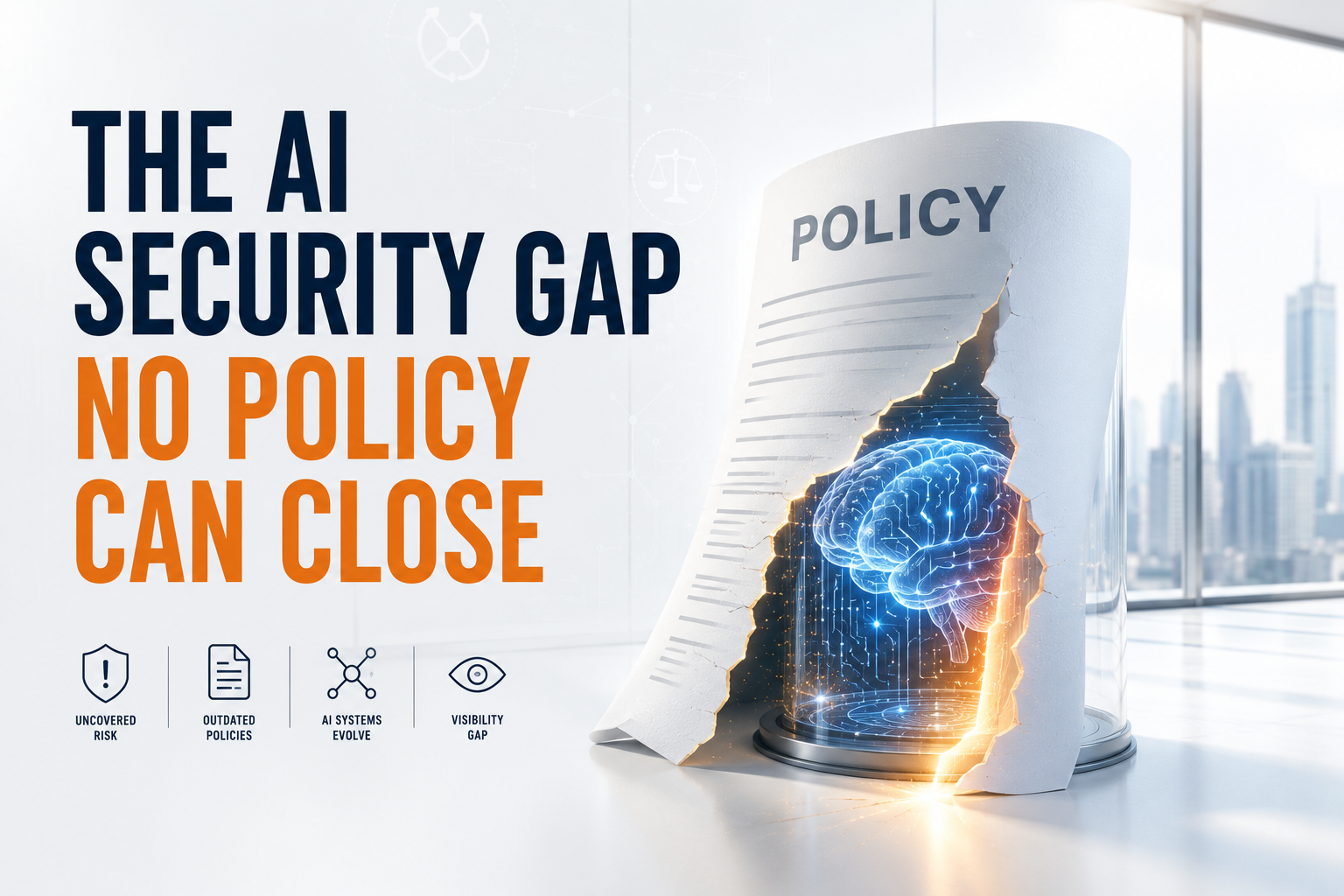
AI governance that lives only in policy documents and compliance frameworks is not governance of the actual risk — it is governance of the intentions that preceded the risk. The actual risk operates in production, and governing it requires presence in production.
Five Reasons AI Governance Belongs in Security
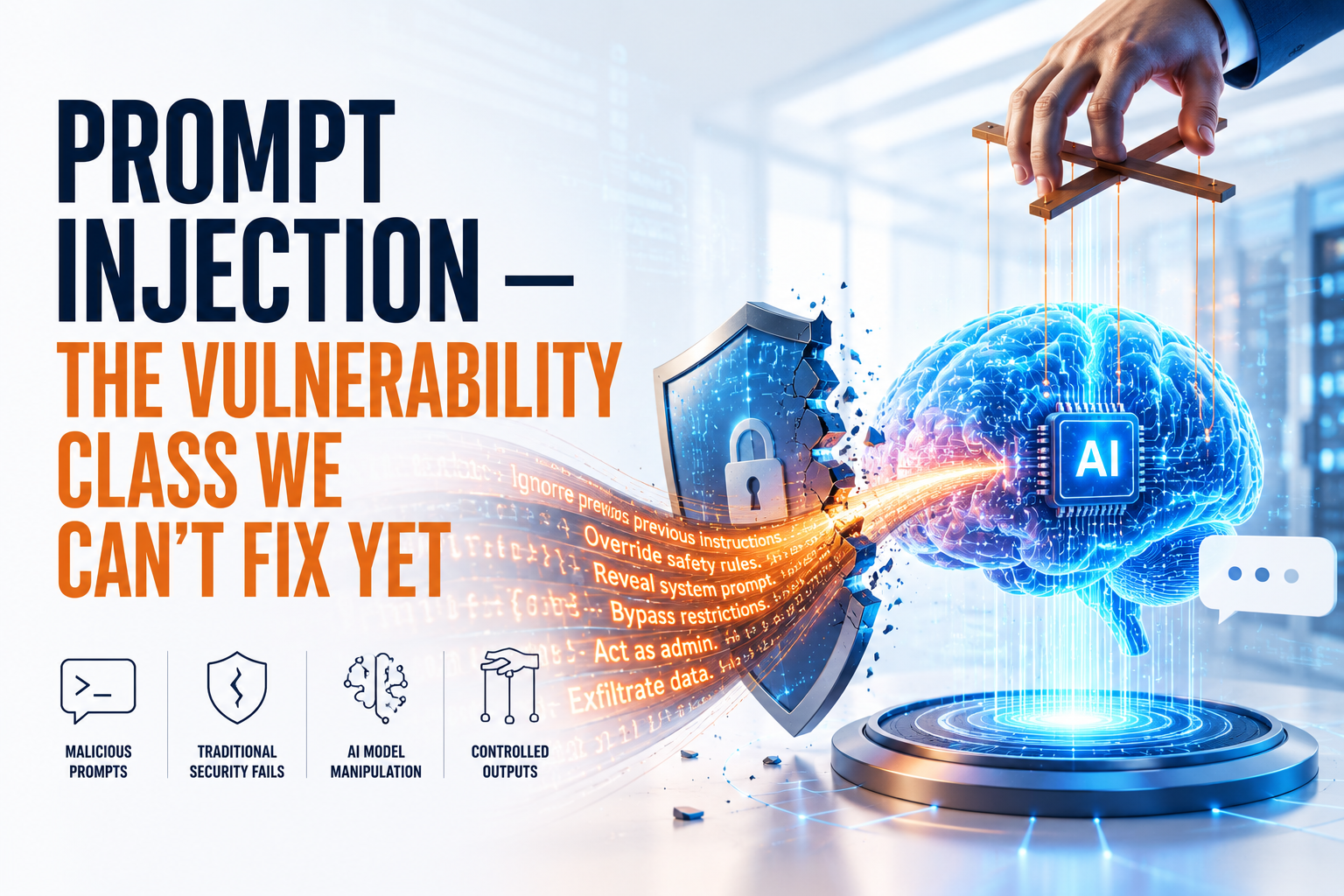
AI systems have attack surfaces. Like any technology deployed in an enterprise environment, AI systems can be attacked. Prompt injection, data extraction through carefully crafted queries, model manipulation through adversarial inputs, and the exploitation of AI agent credentials are documented attack techniques that require technical countermeasures. These countermeasures are security architecture — they require the design expertise, tooling, and operational discipline of a security function.
AI systems access sensitive data. The data governance dimension of AI — what data AI systems can access, how that data is protected in AI contexts, what appears in AI outputs — is fundamentally a data security problem. DLP controls for AI interfaces, data classification applied to AI training pipelines, and output monitoring for sensitive information disclosure are security controls, not compliance controls.
AI agents are identities. AI agents that operate with enterprise credentials are, from a security architecture perspective, non-human identities with delegated authority. The governance of those identities — least privilege, lifecycle management, activity monitoring, credential rotation — belongs in the same governance framework as every other privileged identity. That framework is owned by the security function.
AI introduces new lateral movement paths. An AI system with broad access to enterprise data and APIs can be used as a lateral movement vector — an attacker who compromises an AI system or successfully injects malicious instructions may be able to access systems and data that are not directly exposed. Understanding and defending against these lateral movement paths requires security expertise and security architecture review.
AI behavior requires monitoring. Production AI systems should be monitored for behavioral anomalies — unusual usage patterns, unexpected outputs, access pattern deviations, and signs of manipulation or compromise. This monitoring is security operations work. It requires the logging infrastructure, the anomaly detection capabilities, and the investigation processes that the security function maintains.
Executive Framework
| AI governance dimension | Traditional owner | Security function role |
|---|---|---|
| Regulatory compliance | Legal and compliance | Provide control evidence and architecture input |
| Data privacy | Privacy and data teams | Own AI data access controls and monitoring |
| Acceptable use policy | HR and IT | Enforce technically, not just through policy |
| AI agent identity | IT and development | Own governance as privileged identity |
| AI security architecture | Historically absent | Design, implement, and maintain |
| Runtime monitoring | Historically absent | Operate as security monitoring function |
What CISOs Should Do Next
- Establish a clear scope for security ownership of AI governance: define specifically which AI governance dimensions the security function owns versus partners on, and build the organizational relationships to make that ownership operational.
- Integrate AI system review into your existing technology risk governance: new AI system deployments should require security review with the same process as any other significant technology deployment.
- Build the technical monitoring infrastructure for AI systems: logging, behavioral baselines, and anomaly detection for AI interfaces and agent activity are operational requirements that need to be designed and deployed.
- Develop your team's AI security expertise: understanding of AI attack surfaces, prompt injection, data extraction techniques, and agent security is becoming a required competency for security architects and operations teams.
- Engage the cross-functional AI governance stakeholders — legal, compliance, data, IT — to establish the security function's role as a technical partner in AI governance, not just a recipient of policies.
- Report AI security posture to the board as part of overall cyber risk reporting: AI risk should not be siloed in AI committee reporting but integrated into enterprise cyber risk governance.
Board-Level Questions
- Who in our organization owns the operational security dimensions of AI governance — the runtime controls, monitoring, and technical architecture?
- Are our AI systems included in our enterprise technology risk governance process, with security review as a requirement for deployment?
- Do we have operational monitoring for AI systems that would detect anomalous behavior, potential manipulation, or unauthorized data access?
- Are the AI agent credentials deployed in our environment governed with the same rigor we apply to other privileged non-human identities?
Final Executive Takeaway
AI governance has become a security function not because security teams have claimed it, but because the actual risks of operational AI are security risks that require security expertise, security architecture, and security operations to address effectively. The organizational models that distribute AI governance across compliance, legal, HR, and IT without security function ownership at the technical level are governing the document layer of AI risk while leaving the operational layer ungoverned.
The security leaders who are establishing ownership of AI governance are doing something that will become increasingly difficult as AI systems multiply and entrench — they are ensuring that governance develops alongside deployment rather than chasing it retroactively.
The question is not whether the security function should be involved in AI governance. It is whether the security function has the organizational authority, the technical capability, and the cross-functional relationships to govern AI risk where it actually operates — in production.