Source: www.lastwatchdog.com – Author: bacohido

By Byron V. Acohido
A quiet but consequential change is reshaping the foundations of online trust.
Related: CISA on quantum readiness
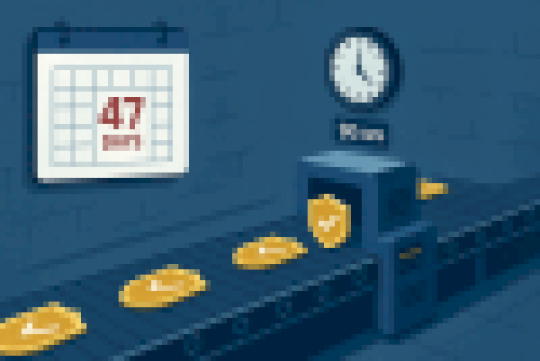
 Starting in 2026, TLS certificate lifespans will shrink in stages — from 200 days, to 100, and eventually just 47 by 2029. The shift marks a sharp departure from today’s 398-day standard and will force organizations to rethink how they manage renewals.
On the surface, it’s a compliance tweak. In reality, it’s a systemic stress test. Every website, mobile app, and cloud service depends on these certificates to establish secure connections. As renewal windows shrink, the margin for error narrows dramatically.
Yet certificate management remains a back-office chore in many enterprises. Manual, ad hoc tracking remains common practice. This is so even inside companies that otherwise pride themselves on digital transformation. With certificate lifespans shrinking, that mismatch is about to become unsustainable.
Independent research backs this up. A recent Forrester study found that automating certificate management cut renewal times by nearly 98 percent, solid evidence that efficiency gains translate directly into resilience.
The broader context makes the compression even more consequential. Financial institutions are experimenting with federated PKI models to handle identity and interoperability at scale. Quantum computing looms as a challenge to today’s cryptography. And the drumbeat of ransomware and supply-chain compromises only adds to the strain.
What ties these threads together is a need for automation and orchestration. Organizations that build automated, policy-driven certificate management now will not only survive shorter lifecycles; they’ll be positioned to adapt quickly as new trust models — and new cryptographic realities — emerge.
We spoke with Ashley Stevenson, VP of Product & Solutions Marketing at DigiCert, all about what shorter certificate lifespans mean for digital trust.
LW: Certificates are often described as the foundation of digital trust. Can you put that in plain terms? What makes them so important?

Stevenson
Stevenson: A digital certificate is really just a credential, but one with very high trust. Think of it like a passport or a police badge — it works because of how it’s issued and the cryptography behind it. That cryptography lets us prove identity without ever exposing the private key itself. It’s at the core of secure communications everywhere.
LW: Lifespans are about to shrink dramatically. How does that change the picture for enterprises?
Stevenson: Every certificate has an expiration date — and when it’s up, the system relying on it stops working. Today’s 398-day lifespan is about to shrink, first to 200 days, then 100, and eventually just 47 days by 2029. That creates much more pressure. If you miss a renewal, you can trigger an outage, and outages mean downtime, lost revenue, and trust issues.
LW: What’s the concern you hear most often from the field?
Stevenson: The big one is simply keeping up. Many organizations still track certificates in fragmented, manual ways. That worked when certificates lasted a year or more, but it won’t scale as lifespans shorten. Manual processes are no longer viable — you need automation and consolidation to reduce risk and cost.
LW: Forrester recently studied this space. What did they find in terms of business impact?
Stevenson: Forrester’s model showed clear ROI. For example, DigiCert customers reduced renewal times by 98 percent. That’s the difference between a person clicking through web forms and an automated system triggering a renewal through APIs in seconds. It’s not just time savings — it’s resilience.
LW: Outages are always a sore spot. How does automation help there?
Stevenson: Two ways: you cut labor costs because you’re not manually renewing at scale, and you dramatically reduce the risk of an outage caused by a missed certificate. Avoiding outages means avoiding both direct financial loss and the harder-to-quantify hit to brand reputation and customer trust.
LW: The financial sector is moving toward federated PKI models like X9. What’s the significance?
Stevenson: X9 was born in banking, where different systems across institutions needed to trust each other. It’s about secure interoperability, not just browser-based SSL. And it’s not limited to finance — you can see the same principle in retail supply chains or healthcare cooperatives, where multiple systems need to talk securely under shared policies.
LW: Finally, what’s your guidance to CISOs and CIOs looking ahead?
Stevenson: Organizations can’t afford to wait for quantum to arrive. At some point, quantum computers will break today’s cryptography. The good news? If you centralize and automate certificate management now, that same infrastructure will carry you into the post-quantum era. You’ll be ready to swap cryptography at enterprise scale — fast, and without disruption.

Acohido
Pulitzer Prize-winning business journalist Byron V. Acohido is dedicated to fostering public awareness about how to make the Internet as private and secure as it ought to be.
(LW provides consulting services to the vendors we cover.)
September 3rd, 2025 | Q & A | Top Stories
Original Post URL: https://www.lastwatchdog.com/critical-insight-qa-as-digital-trust-compresses-resilience-will-require-automation-and-scale/
Category & Tags: Q & A,Top Stories – Q & A,Top Stories
Views: 3