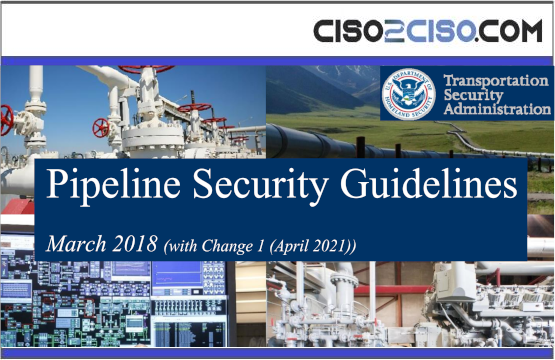
Under the provisions of the Aviation and Transportation Security Act (Public Law 107-71), the Transportation Security Administration (TSA) was established on November 19, 2001 with responsibility for civil aviation security and “security responsibilities over other modes of transportation that are exercised by the Department of Transportation.” On September 8, 2002, TSA initiated its pipeline security efforts. Those responsibilities now reside within the Office of Security Policy and Industry Engagement’s Surface Division.
Background and Purpose
In executing its responsibility for national pipeline security, TSA originally utilized the Pipeline Security Information Circular, issued on September 5, 2002, by the Department of Transportation’s (DOT) Office of Pipeline Safety as the primary Federal guideline for industry security. Complementing this document, and also adopted by TSA, was the DOT-issued Pipeline Security Contingency Planning Guidance of June 2002.
Recognizing that the Security Circular required updating, TSA initiated a process to amend the Federal security guidance. The 2010 Pipeline Security Guidelines were developed with the assistance of industry and government members of the Pipeline Sector and Government Coordinating Councils, industry association representatives, and other interested parties. This document was soon revised resulting in the 2011 Pipeline Security Guidelines.
The advancement of security practices to meet the ever changing threat environment in both the physical and cyber security realms required that the guidelines be updated again. Utilizing a similar industry and government collaborative approach, TSA developed this document, which supersedes the 2011 version of the Pipeline Security Guidelines.
The security measures in this guidance provide the basis for TSA’s Pipeline Security Program Corporate Security Reviews and Critical Facility Security Reviews. This document is guidance and does not impose requirements on any person or company. The term “should” means that TSA recommends the actions described. Nothing in this document shall supersede Federal statutory or regulatory requirements.
Scope
These guidelines are applicable to operational natural gas and hazardous liquid transmission pipeline systems, natural gas distribution pipeline systems, and liquefied natural gas facility operators. Additionally, they apply to operational pipeline systems that transport materials categorized as toxic inhalation hazards (TIH). TIH materials are gases or liquids that are known or presumed on the basis of tests to be so toxic to humans as to pose a health hazard in the event of a release during transportation. (See the Hazardous Materials Regulations: 49 CFR parts 171-180.) Operators of pipeline systems not included in the descriptions above are encouraged to implement the security measures contained herein to the extent appropriate to their particular system.
Views: 9